Logistics 4.0 Needs Learning 4.0

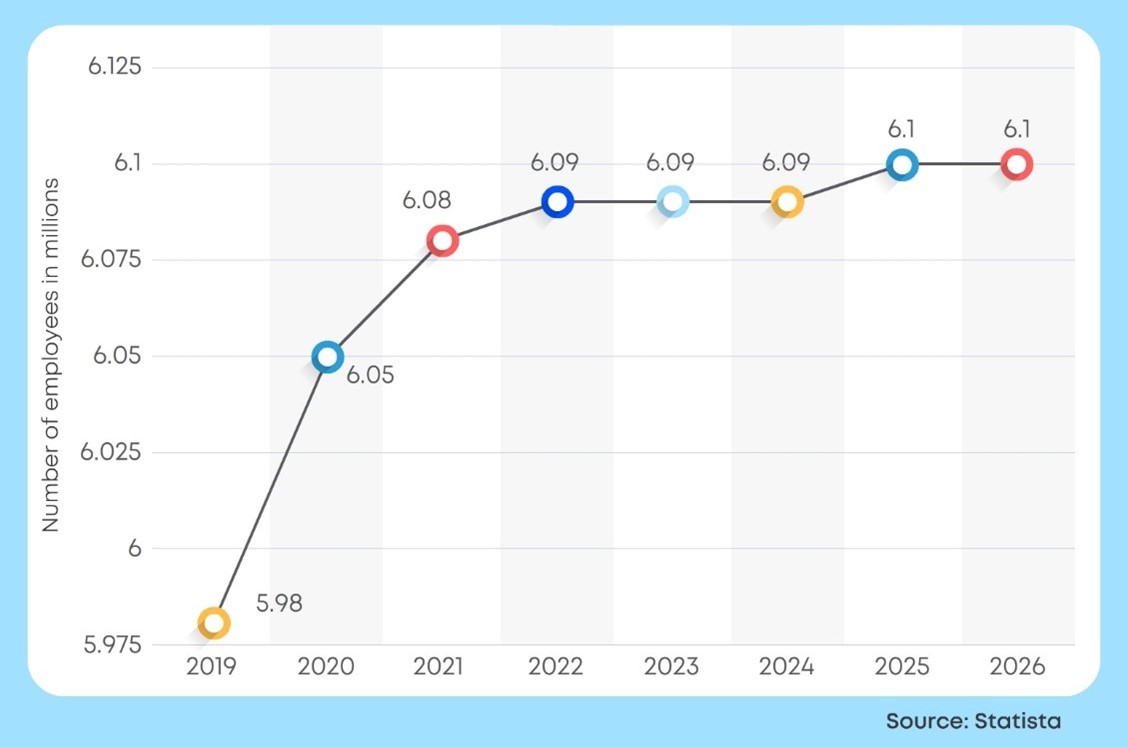
The transportation and logistics (T&L) industry occupies a unique position in the economy. It’s one of the core industries that contributes to the GDP and generates employment in large numbers. According to Statista, the U.S. transportation, logistics, and warehousing industry will continue to add more jobs and provide employment opportunities between 2021 and 2026, as shown in the illustration below:
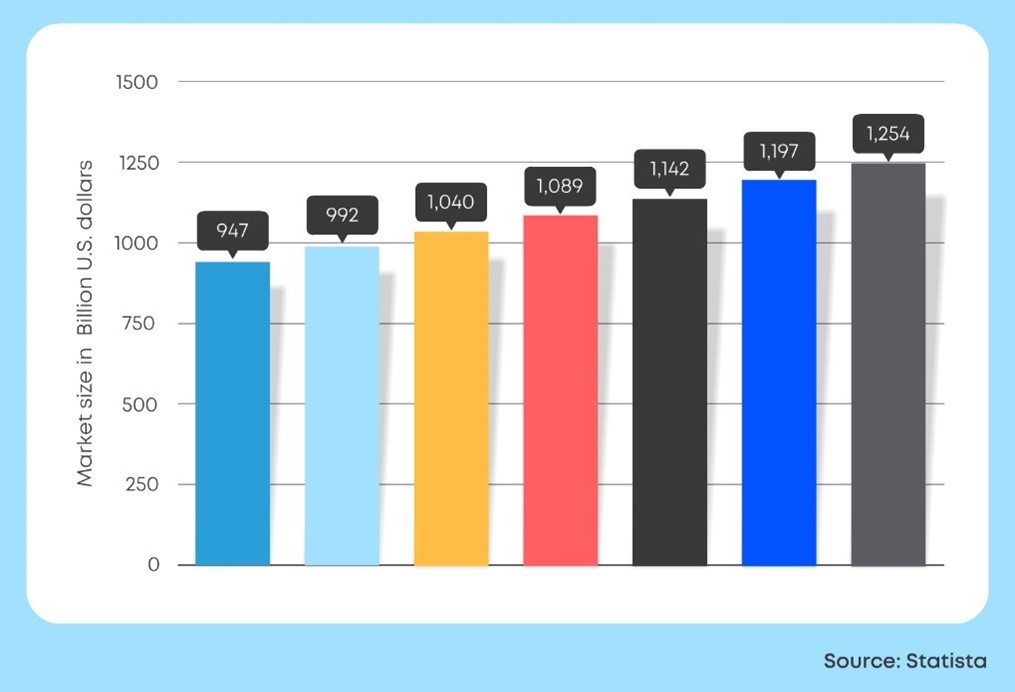
The sector also contributes immensely to the U.S. economy. As per Statista, the U.S. logistics market generated just under one trillion dollars in economic value in 2020. The market is expected to further grow in the next five years, as shown in the illustration below:
Digitization activities around the globe are transforming enterprises and industries. The logistics industry is no exception. New technologies are bringing more efficiency into the logistics operational processes. Technologies at the epicenter of this change include:
- Shipment tracking systems: Software empowered with Artificial Intelligence (AI) has enabled live tracking of shipments and packages in the supply chain process, allowing logistics companies to serve customers better.
- Internet of Things (IoT): IoT in the logistics space has moved the industry forward with its monitoring solutions and the ability to transfer data seamlessly. Transfer of data along devices that are connected in a network has helped logistics companies in a big way.
- Autonomous trucks and drones: Autonomous trucks and drones have changed the cost structure and utilization of trucking, which has had a direct impact on the cost of consumer goods. As per McKinsey, full automation can help the industry reduce operational costs by 45%.
- Enhanced GPS systems: GPS tracking technology in the logistics industry has moved beyond enabling just navigation to help drivers. Today, GPS systems allow logistics companies to locate vehicles, effectively plan driver assignments, and manage costs.
Forecasted industry growth combined with technological disruption has highlighted multiple challenges that need to be addressed on priority. One of these major challenges is the “skill gap” that plagues the industry.
Middle market logistics companies in the United States have been finding it difficult to hire managers and frontline workers who have the skills to work with advanced technologies. A survey of middle market logistics businesses in the United States revealed that 85% of companies find it difficult to fill vacant positions in the supply chain process.
We have put together a detailed report on the learning trends, workforce challenges, and proposed solutions to counter challenges within the logistics industry. To get your free copy of our guide, “Logistics 4.0 Needs Learning 4.0,” please fill out the form below: