Importance of Continuous Assessments

Assessments are a key component in the learning and training journey. Continuous assessments help with identifying learning gaps and bridging them in a timely fashion. To improve the overall learning experience, it is important to have regular assessments. Let us take a look at how continuous assessments can benefit the overall learning process.

What is a Learning Assessment?
A learning assessment is the process of ascertaining the breadth and depth of learning among participants in a learning or training program. Assessments are aimed toward measuring the progress of learning. Learning assessment can also help learning designers achieve a better understanding of the strengths and weaknesses of learning programs.
Learning Assessment Frameworks
There are various types of learning assessments that can be used by evaluators based on their final objectives. Some of the key learning assessment frameworks are as follows:
1. Bloom’s Taxonomy:
Under this framework, in 1956, Benjamin Bloom classified levels of intellectual behavior. The framework was updated in 2001 by Lorin Anderson and David Krathwohl. As per the updated framework, there are six levels on which intellectual behavior of an individual can be analyzed:
1. Remember: The ability to recall, define, or label concepts.
2. Understand: The ability to classify or summarize a concept.
3. Apply: The ability to have some level of implementation of a concept or to follow a process.
4. Analyze: The ability to break down a concept for a deeper analysis.
5. Evaluate: The ability to make a judgement based on the understanding of a concept.
6. Create: The ability to develop something new based on the learning of a concept.
A learner needs to go from one level to another to progress across Bloom’s Taxonomy.
2. Webb’s Depth of Knowledge:
This is another type of framework that was developed to understand the level of learner understanding during the assessment process. It was developed by Dr. Norman Webb in 1997 because standardized assessments were only able to measure how a learner thought about the concept that was taught, but did not explain the context in which a student must understand and be aware about the concept so that they can provide answers and explain situations. The Depth of Knowledge (DoK) framework establishes context, i.e. a scenario, situation, or a setting in which the learners express the depth and extent of learning. The DoK framework includes four levels, where level 1 is the easiest and level 4 is the hardest:
– Level 1 (Acquired knowledge): This includes recall and recognition.
– Level 2 (Knowledge application): This includes answering questions based on the concepts learned.
– Level 3 (Analysis): This includes strategic thinking and explaining how concepts and procedures are used to deliver results.
– Level 4 (Augmentation): This includes extended thinking, moving beyond the existing concepts, and finding how learning can be used in the real world.
Importance of Learning Assessments
Assessments are integral to improving learning. Here are some factors that make assessments an important part of a learning journey:
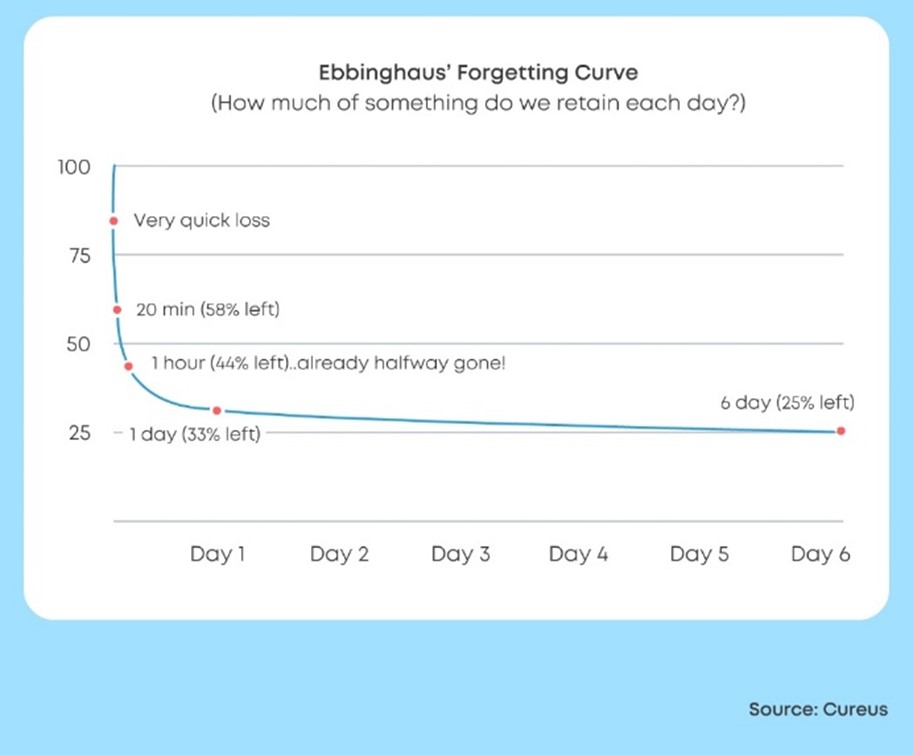
- Improve Stickiness of Knowledge: Learning assessments help in improving “stickiness” of knowledge among participants, or how well they retain the knowledge after the learning experience is over. According to a study, 70% of learning is forgotten within 24 hours of training and 90% is lost within a week. Learning assessments help in increasing knowledge retention.
- Indicator of Growth: Learning assessments are directly related to the growth of the participant. According to World Bank, learning produces gains in individual productivity and income.
- Helps Improve Learning: Assessments help improve the learning process as they are critical to understanding the learning gaps and filling those gaps with timely intervention. According to a study, the brain builds on existing knowledge when it comes to learning. This is why continuous practice and regular interventions have proven to improve performance.
- Increases Confidence: Learning assessments play an important role in increasing the confidence of individuals. Assessments result in the ability to assign marks, grades, or any other mechanism that can act as a badge or certificate of learning and increase learner confidence.
Benefits of Learning Assessments
As per the World Bank study, testing is one of the least expensive innovations in education reform, as compared to other activities like increasing teacher salaries or reducing class size, and carries a higher ratio of benefits to costs.
- Provides Feedback: Learning assessments help provide feedback to individuals and organizations. In the case of continuous assessments, feedback is provided at regular intervals that help in assessing the progress of learning and in taking corrective action accordingly.
- Helps Set Standards: Continuous learning assessments help in setting better standards for learning and performance. Over time, these assessments help in improving the level of training and education.
- Evaluates Progress: Continuous assessments help in evaluating progress for individuals and groups of learners. Regular assessments can track the progress being made under the program. This is done by way of self-assessment, peer review, trainer review, or a third-party review. Peer review is more effective in some situations because it promotes communication and engagement within the group.
In the absence of continuous assessments, there can be gaps in delivery and understanding among trainers and learners. In addition, if you do not assess the impact made by the learning and training material, you are not able to improve the quality of the material over time. It is important to have the right assessment strategy to benefit all stakeholders involved – participants, trainers, and learning designers.
Assessment can be done in multiple ways. It can be self-assessment, between peers, or even larger groups. It can also be done by the trainer or by a third party either during or at the end of the program. There are multiple ways of going about these assessments depending on your end objective. Whichever method you follow, ensure that your learning module has assessments at various levels to improve the overall learning experience and to provide value to the learner.